
The paintings function as portals into a secret jungle we recognise but cannot quite access, and simultaneously as fragments cropped from an immense, as‑yet‑unpainted panorama.
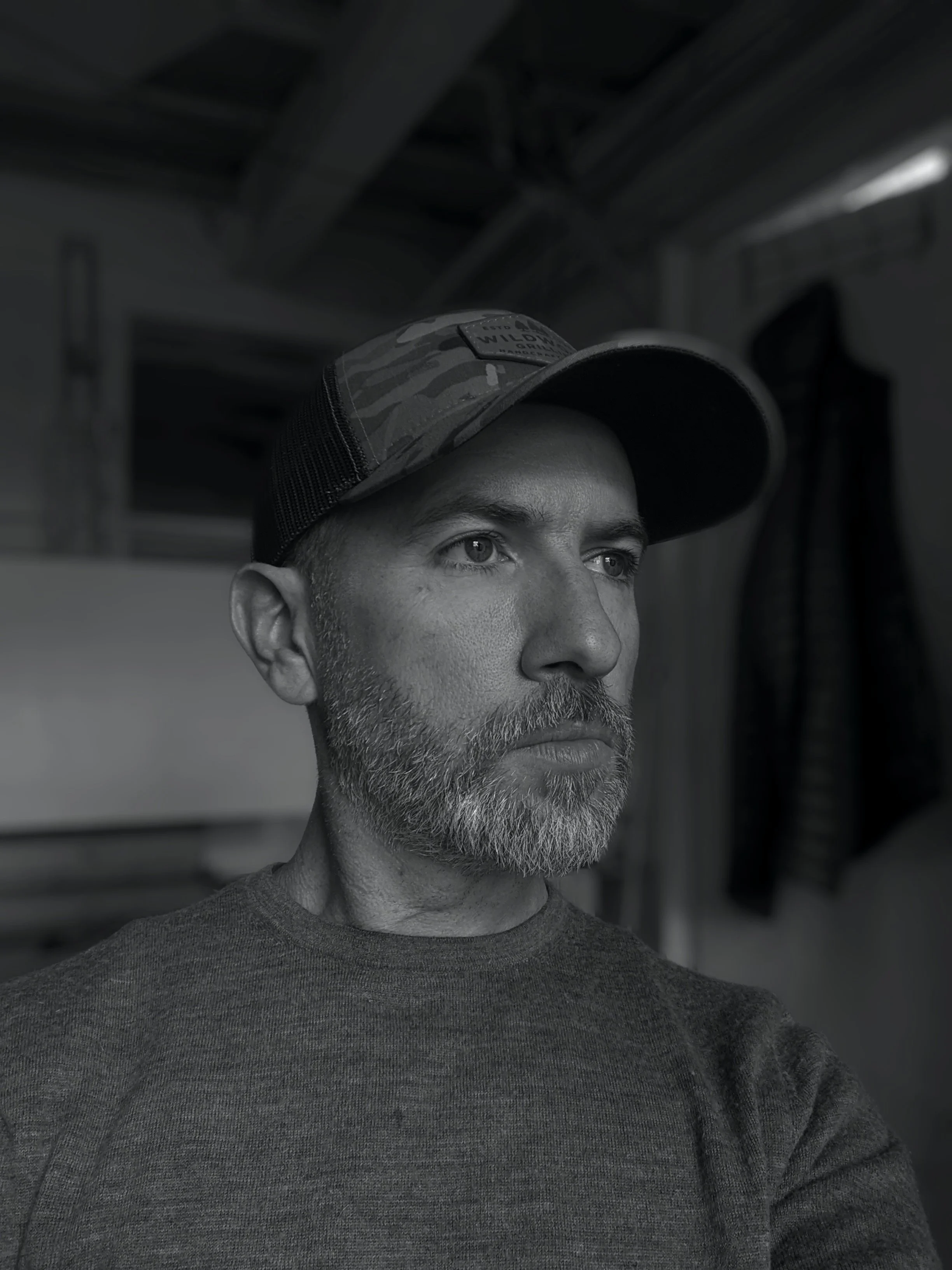
Tom Hughes began his career as an illustrator and then became known for atmospheric oil paintings of urban, coastal, and rural landscapes across Bristol, the South West, London and beyond. His work has earned multiple national awards, works in major UK exhibitions and solo exhibitions in the heart of St. James’s London.
Tom Hughes Biography
He has worked independently from his studio in recent years creating authentic oil paintings, with few works appearing on the market as most have been snatched direct from the studio by collectors.

New Works - Portals
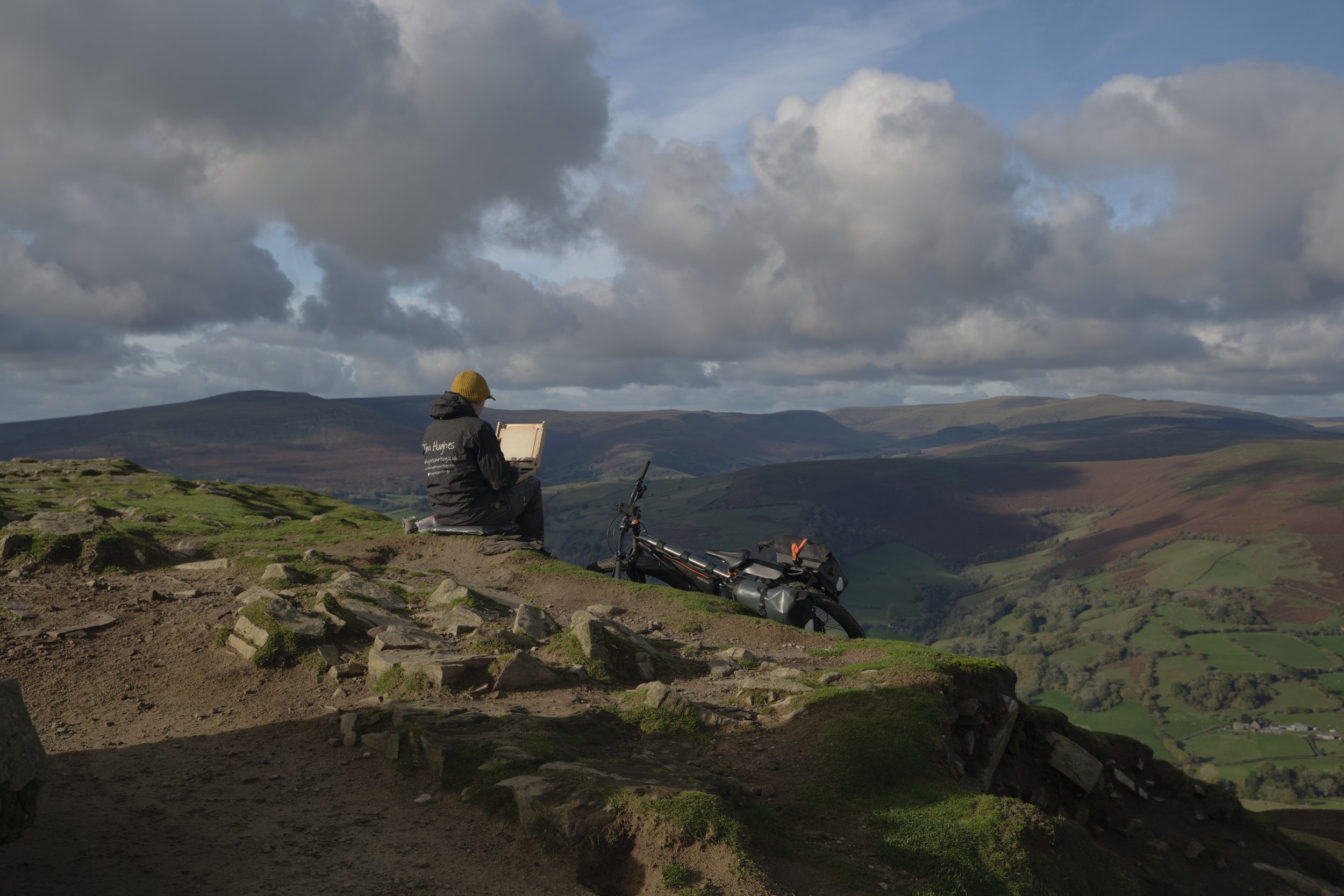
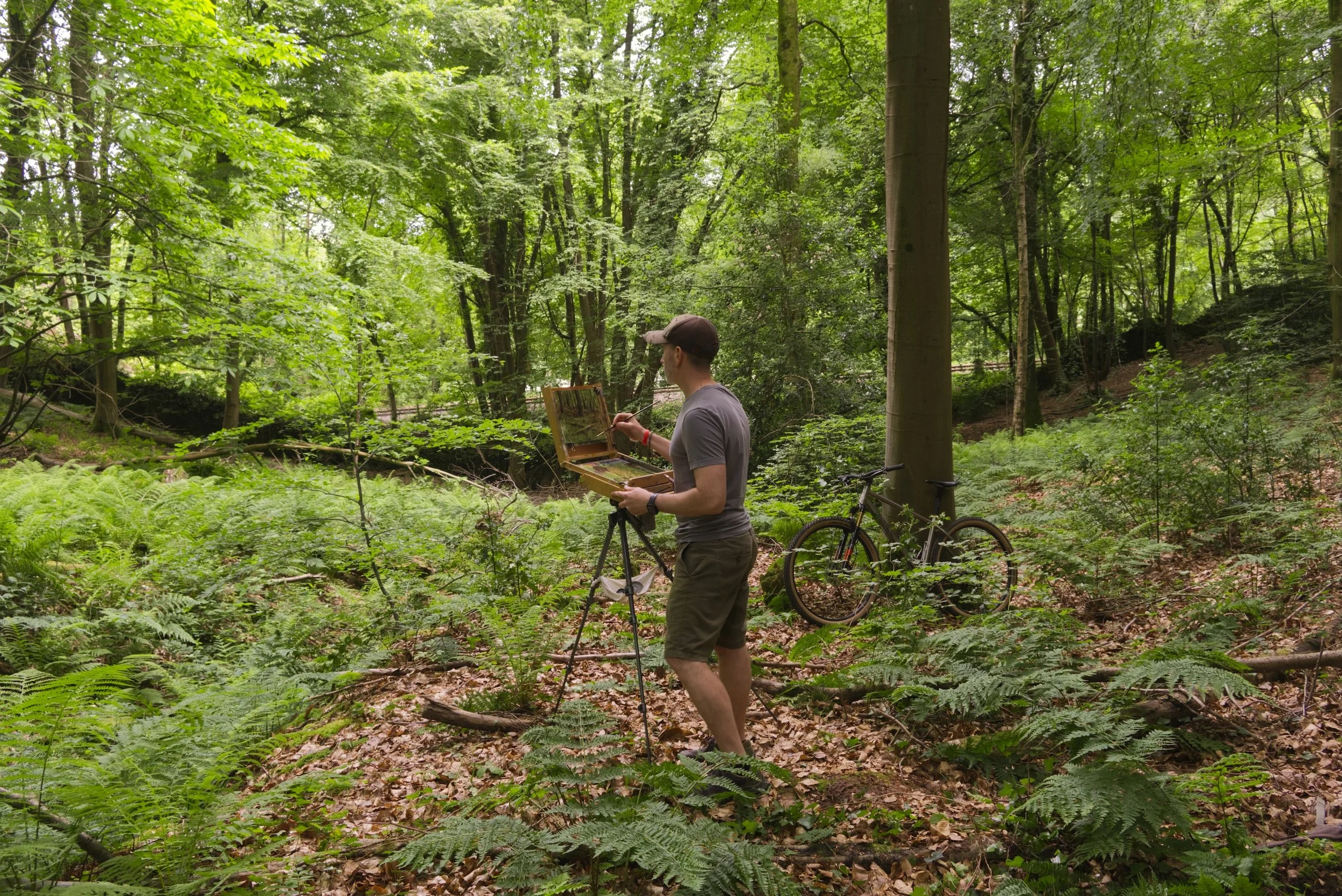
The foundation of Hughes’s practice has been painting on location, where he has spent thousands of hours working directly from observation to refine his handling of colour, light and atmosphere. Smaller works are frequently completed in a single, intense alla prima session, while larger canvases are developed back in the studio, building upon this sustained engagement in the field.
Meeting Hughes, it is difficult to imagine his practice remaining static: his questioning, restless energy almost demands a new level. That focus has now turned towards the minutiae of the British landscape, where his eye isolates small wild plants that many artists might register only as an absent‑minded brush stroke at the edge of a larger composition. Instead, he has recognised these modest plants in hedgerows and verges as primary subjects.
This new series consists of works that most painters would neither imagine devoting such sustained, hyper‑focused labour to, nor choose to render at their true scale. Hughes applies to these small plants and creatures the kind of seriousness usually reserved for grand gardens or sweeping vistas, painting them at a strict 1:1 ratio so that the viewer effectively crosses a threshold into their world.
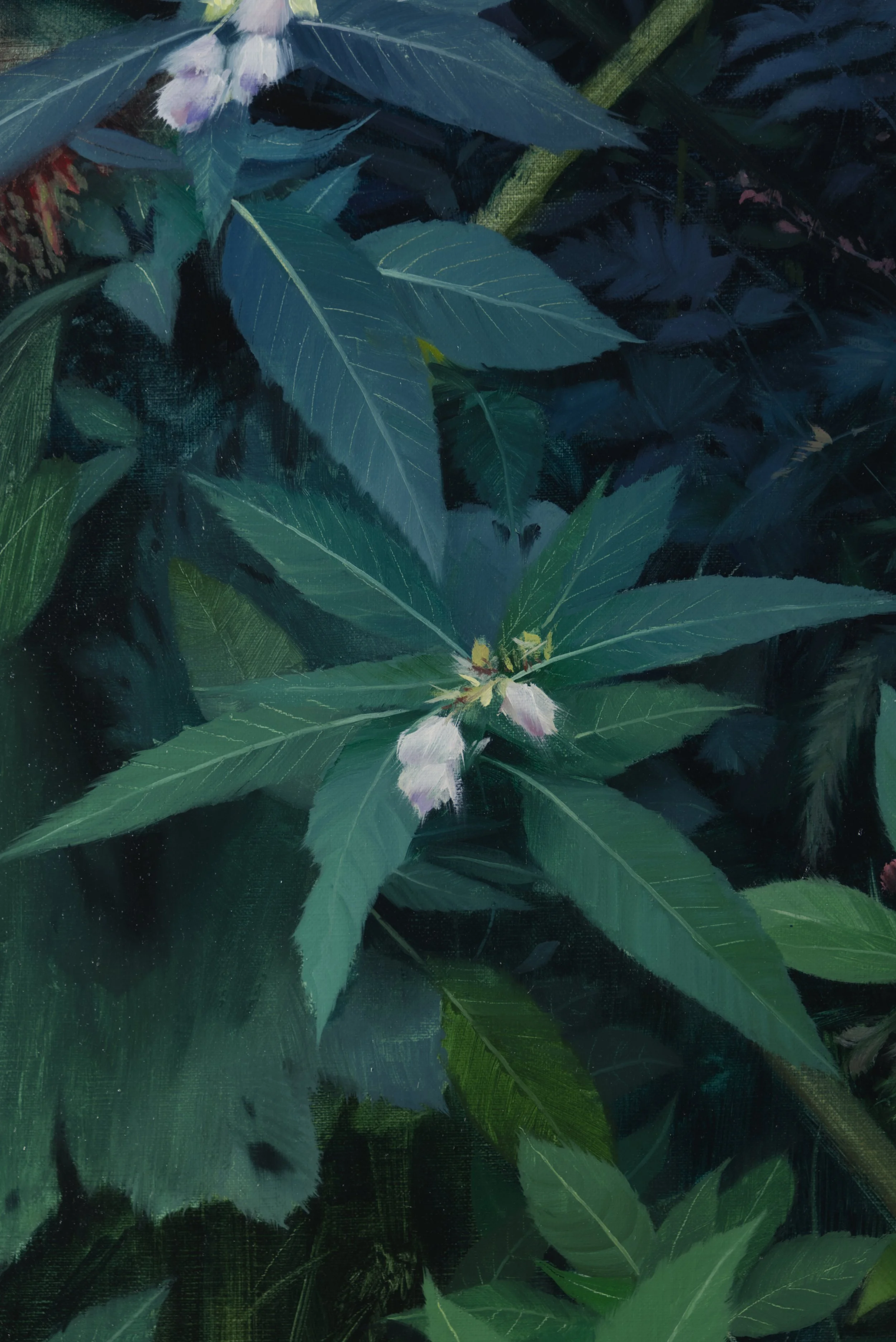
We become the tiny creatures in our own landscape as the wildflowers rise like towering jungles, transforming native “weeds” into exotic, verdant terrains. A dock leaf becomes glamorous and authoritative, granted equal status to more obviously “important” species and reminding us of the role these plants play in human survival.
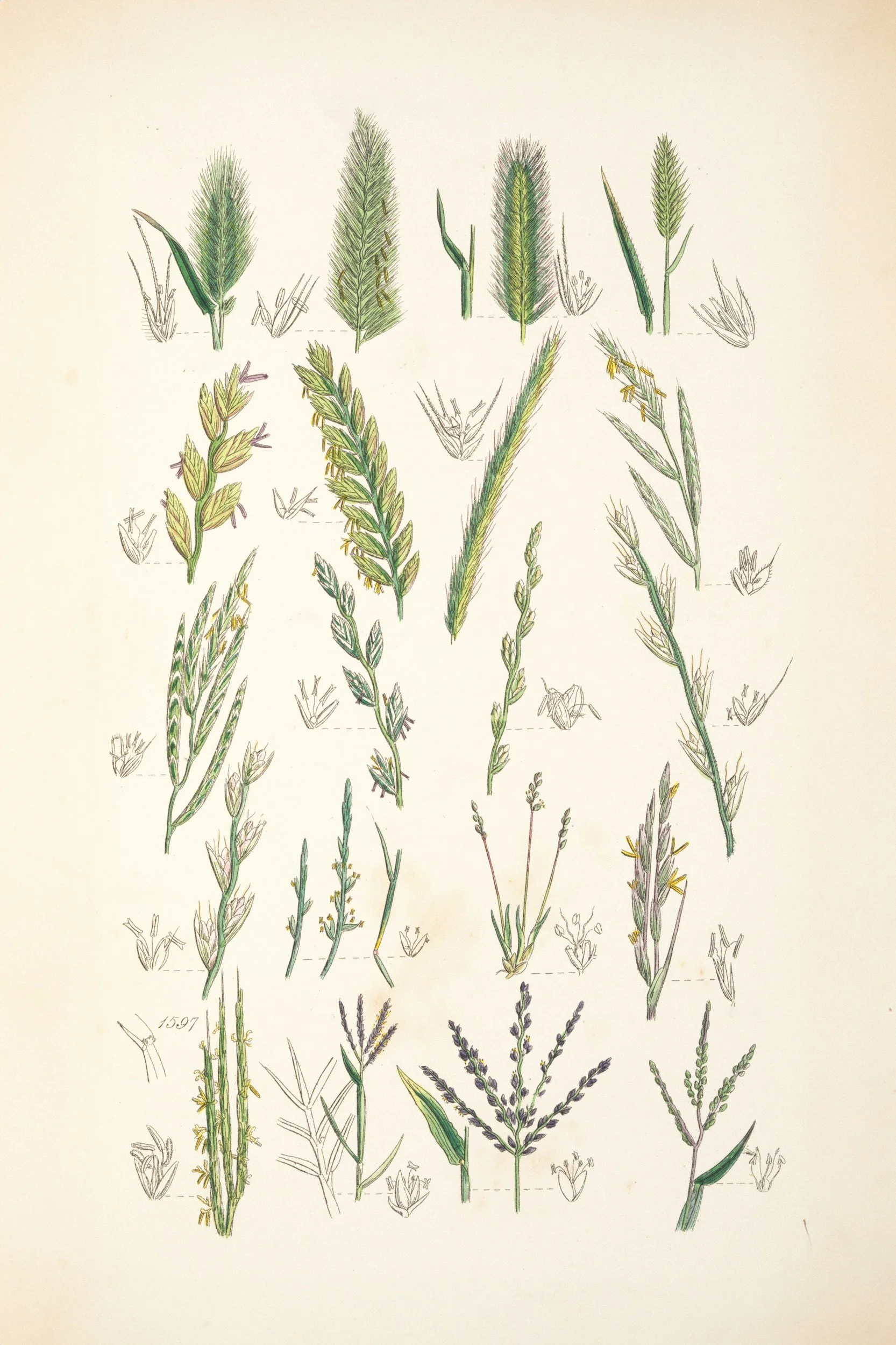
Hughes positions wildflowers not as generic symbols of nature but as specific, individuated presences whose physical dimensions and idiosyncrasies are captured. Each stem, head and leaf is rendered at true scale, turning the unassuming flora of verges, meadows and waste ground into a calibrated encounter with the real rather than a stylised memory. This commitment to 1:1 representation nods towards the observational discipline of botanical illustration while remaining fully grounded in contemporary painting.
In a visual culture where flowers are often enlarged to the monumental or reduced to decorative motif, Hughes’s refusal to manipulate scale becomes a critical gesture. By neither aggrandising nor miniaturising his subjects, he insists on their physicality and invites viewers to register wildflowers as they appear in the field: modest, complex and resistant to spectacle. The format heightens awareness of time and looking, asking for a slowed, almost meditative attention to structure, translucency and minute shifts of colour.
The paintings function as portals into a secret jungle we recognise but cannot quite access, and simultaneously as fragments cropped from an immense, as‑yet‑unpainted panorama. Confronted with them, one becomes acutely aware of the sheer number of hours embedded in each surface and of the years of accumulated skill required to sustain such intensity of attention.
Reclaiming our Wild Plants
This approach generates a productive tension between scientific exactitude and painterly interpretation. The works can be read as meticulously observed specimens, yet they also occupy an affective space where chance arrangements, imperfect petals and environmental contingencies become compositional events. In this way, Hughes’s practice reclaims wild plants from the aesthetic of the merely “pretty” and treats them as sites of sustained inquiry into perception, scale and the politics of what is deemed worth looking at.
In 2025, collectors were overwhelmed by digital emotionless. Hughes’ value lies in the visible evidence of the hand. A collector should be able to look at a 10cm square of the canvas and say, "That’s a Hughes." In a world of digital perfection, this confident, unlabored mark-making is exactly what serious collectors are pivoting back towards. As AI generates infinite synthetic imagery, "truthful recording" becomes a scarcity. Tom’s work created in the rain or wind of our landscape and then developed in the studio are ‘proof of human presence’, as it is an ecological and human document of the British landscape. We are seeing a major market shift where collectors are seeking 'analog truth' as a hedge against the digital world.
This isn't just a pretty view; it’s a radical act of human observation - a verified document of a specific hour that is later developed with pure human creativity that an algorithm could never invent. That authenticity is the new premium.
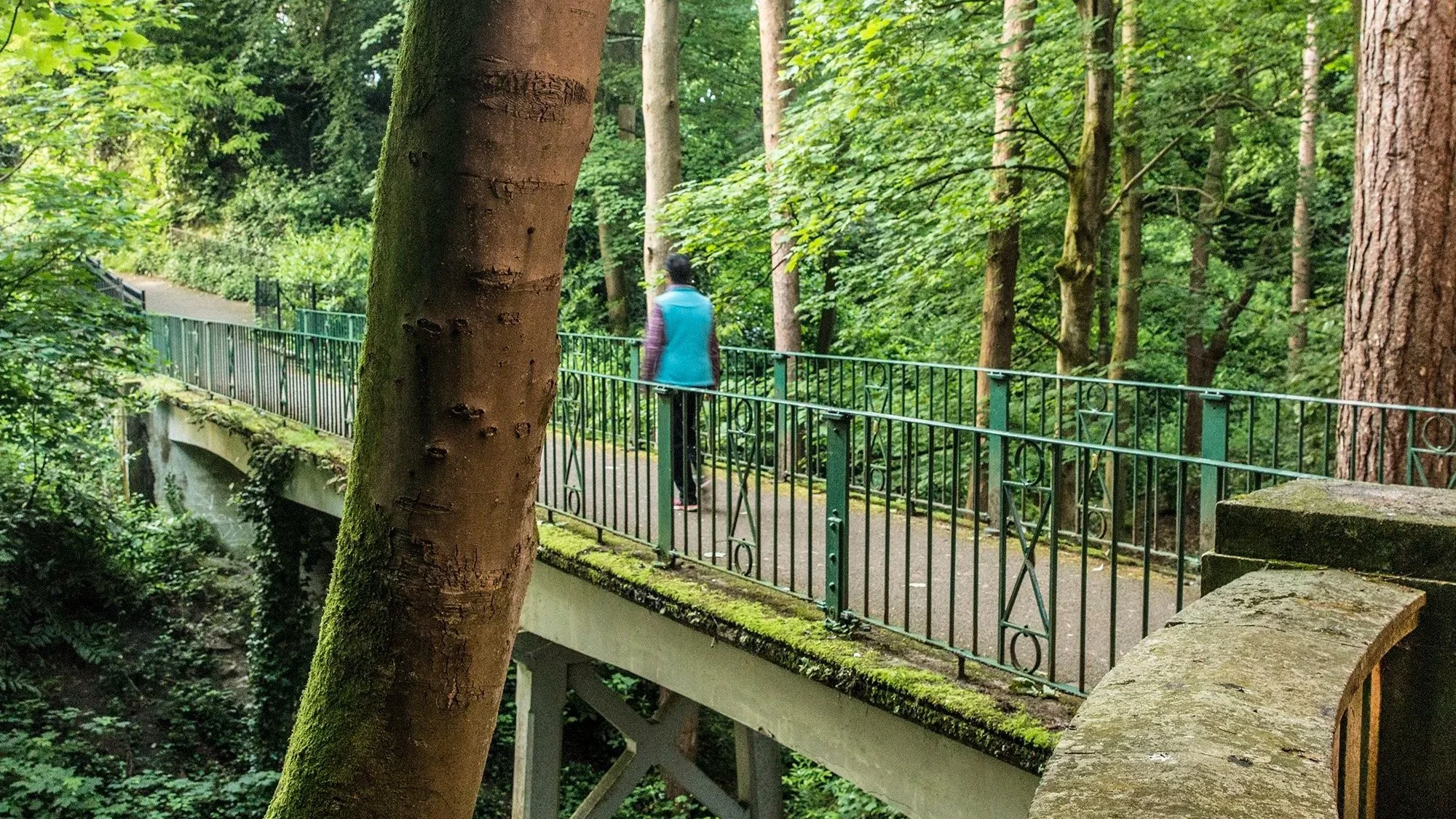
Chine
A chine is a steep-sided dry river valley. Alum Chine is the largest of the four chines in Bournemouth. Alum Chine got its name from the alum mining which took place locally in the 16th century. Alum is a fixative that was used in dyeing, tanning and painting. The mines eventually became uneconomical and closed in the mid-17th century. The area was bought by William Dean in 1805 and this began the Cooper-Dean dynasty. At the time, local fishermen and smugglers, were using the bay-side area to store their boats and equipment. The tropical gardens were laid out in the 1920s, but by the 1990s they had become overrun. In 1996 the gardens were replanted, and a paved viewing area added as part of the Gardens of Excellence scheme in the United Kingdom. The juxtaposition of Hughes painting the wild plants in the forgotten areas in a grand English Garden, is stark.
The Chine Series
This ‘portal’ collection, has begun in in each of the three ‘Chines’ of the seaside town of Bournemouth. Hughes has created three large works from his field studies with days of meticulous work in the studio. While Tom is known for small, jewel-like plein air boards, his large-scale botanical works, offer an "Architectural Command”, whilst their cohesive tones allow the viewer to stare meditatively into the depths. These works move to being key works within a collection and they have 'wall power' to anchor a major room.
Because he splits his time between the field and the studio, large-scale works are naturally capped by his labor-intensive process. Accessing a major studio painting is difficult because they are the "synthesis" of hundreds of field studies. While his plein air sketches appear more frequently, securing a major studio work like this is rare, it represents the synthesised culmination of his field research, and the waiting list for pieces of this finish is the primary driver of their demand.
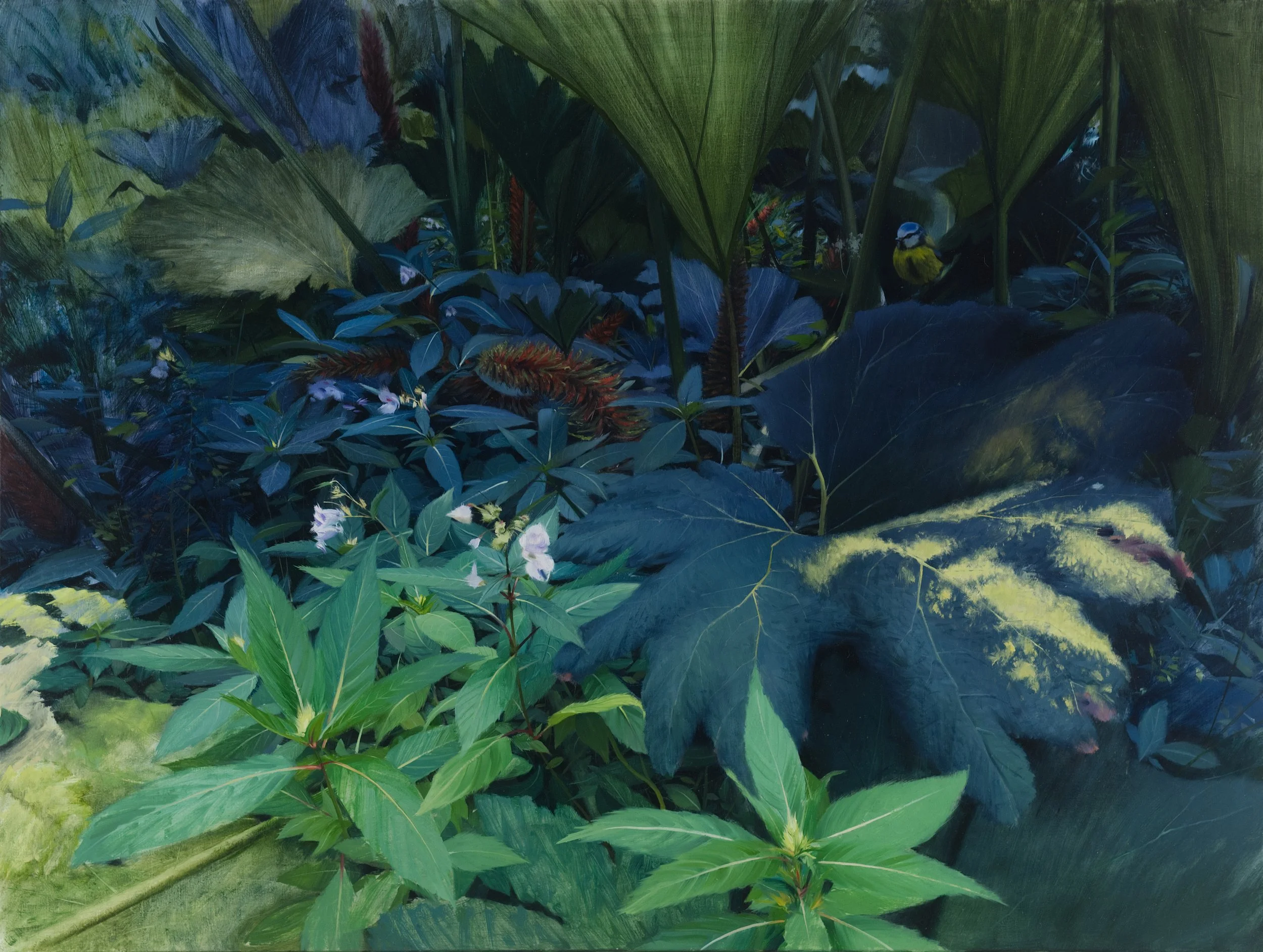
For a preview of the start of the Chine Series, do get in touch via the button below.
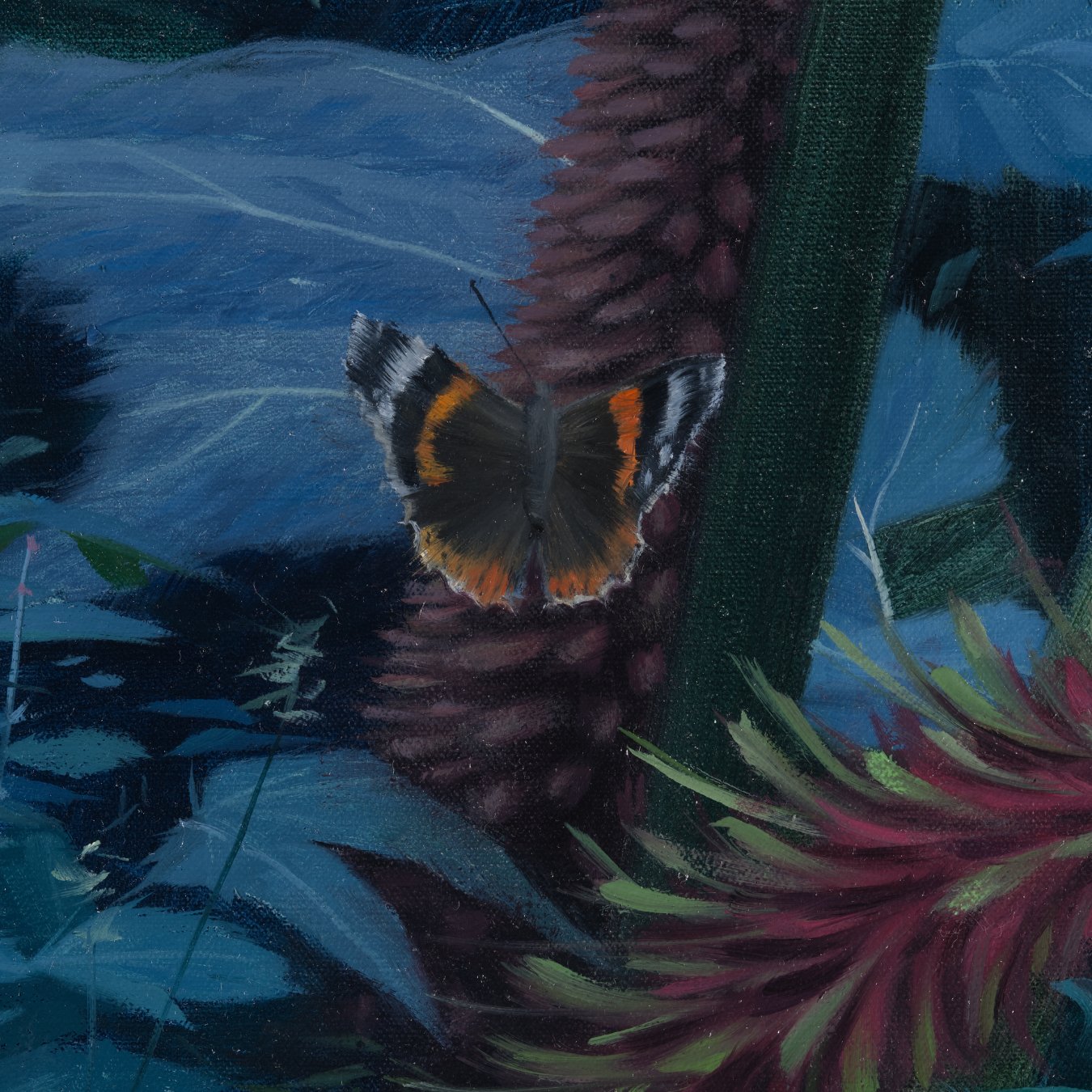
Tom’s paintings also carry a quietly playful yet deeply traditional motif: an embedded “easter egg” that links his practice to a broader history of British visual culture. Just as the mouse carved into Robert Thompson’s “Mouseman” furniture, the hare in Turner’s ‘Rain, Steam, Speed’ or the mouse in Terence Cuneo’s paintings became signatures within otherwise serious work, Hughes conceals one or two native wild creatures within each canvas. These may be birds, mammals or butterflies, sometimes shown simultaneously in different stages of their development—chrysalis, caterpillar, butterfly—so that the life cycle itself becomes part of the picture’s underlying structure and a subtle reminder of time moving continuously through the fabric of the planet.
At Harvey Horswell, the focus is on artists and bodies of work that allow us to re‑encounter the world through a different lens, opening up a renewed sense of wonder. Tom Hughes achieves this while reminding us how vital even the smallest elements of our everyday planet truly are.

VIEWING WORKS WITH HARVEY HORSWELL
STUDIOS – We arrange dedicated visits to our contemporary artists’s spaces, studio or foundries, which currently span from London to Bristol.
LONDON – Harvey Horswell maintains membership access to the House Clubs at both the Royal Academy on Piccadilly and the National Gallery on Trafalgar Square. To organise a presentation of a curated selection of works in these spaces, simply contact us via the button below.
EXHIBITIONS – By joining our mailing list you can recieve updates about our artist’s exhibitions.
COLLABORATION – We have three large scale projects planned for 2026, which involve some of our artists and each of our artist’s is working towards their own dedicated projects. Join our mailing list for early access to these.
COLLECTIONS – Many of our artists exist in public collections or in public spaces. For a list of where you can view these out in the world, contact us below.